When many people hear the word trauma, they think of a single, life-altering event such as an accident, an assault, or a natural disaster. While those experiences absolutely count as trauma, the reality is that trauma can take many forms, and it does not always look the same from person to person.
“One of the misconceptions about trauma is that it has to involve some form of abuse,” says Robin Motz, who is a Certified Clinical Trauma Professional with the Riverside Behavioral Health Pathways Outpatient Program.
“Trauma is defined by how the brain and nervous system respond to any experience. It does not look or feel the same for everyone. Everyone experiences things differently. Trauma is about what happened to you, not ‘what is wrong with you’. If something left you feeling unsafe, overwhelmed, or changed the way you move through the world, it deserves care and attention.”
Trauma is less about what happened and more about how it affected you. Any experience that overwhelms your ability to cope, leaves you feeling unsafe, powerless, or deeply distressed can be traumatic.
Some types of trauma are obvious, like physical or sexual abuse, domestic violence, or the sudden loss of a loved one. Others are less visible but just as impactful, including chronic stress, grief and loss, emotional neglect, childhood instability, medical trauma, or repeated experiences of feeling unheard or unsupported. Even ongoing pressure to be strong or put others first can leave lasting emotional marks.
Healing does not have to happen alone.
“Healing happens best in spaces where we feel safe, seen, and understood,” explains Motz.
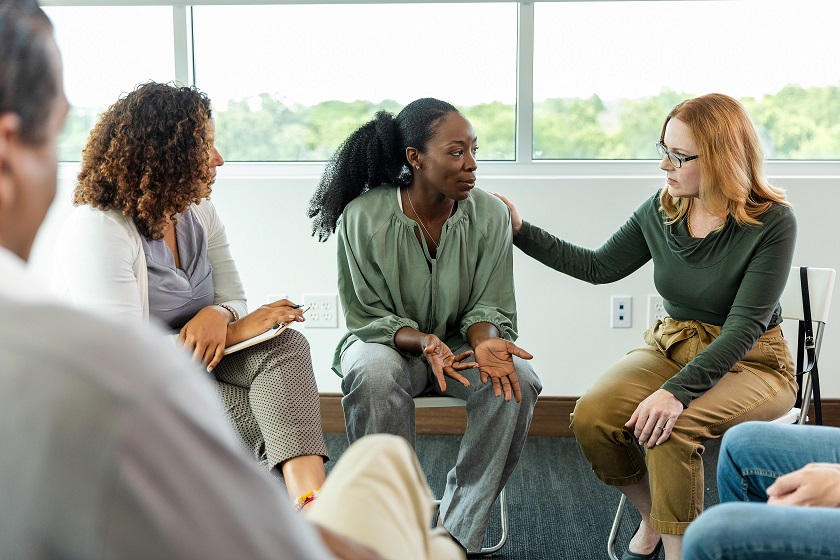
At the Riverside Behavioral Health Pathways Outpatient Program, our trauma-informed women’s group offers a supportive environment focused on connection, understanding, and practical tools for navigating trauma experiences and trauma responses.
This women-only group is designed to meet participants where they are, honoring each individual’s experience without pressure or judgment.
Healing does not require reliving the past or having to share all of your deepest and most vulnerable moments. It begins with feeling safe and supported.
To learn more about the trauma-informed women’s group or to see if it is the right fit, call the Pathways team at (815) 936-7373.