Speech Therapy at Riverside: Advanced Care for All Ages
March 16, 2026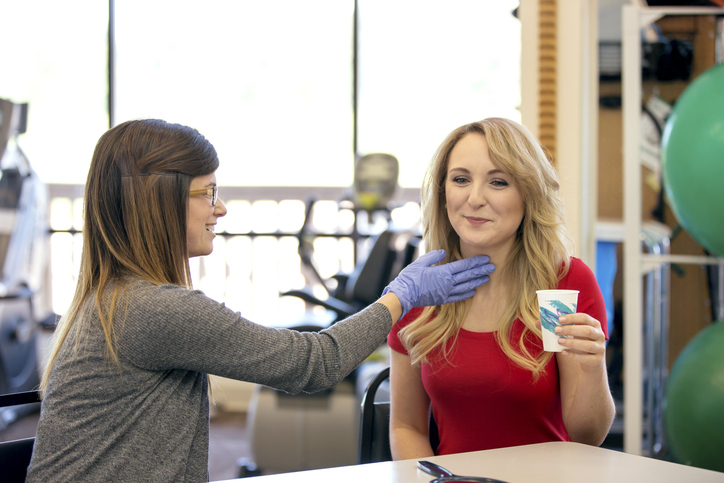
What Is Speech Therapy and Who Can Benefit?
Speech therapy is often associated with helping people pronounce words, but its reach is much broader. Today, the field supports communication, thinking skills, social interaction, voice problems, and even swallowing—helping people of all ages function more safely and confidently in daily life.
By offering targeted support for a wide range of needs, speech therapy can improve quality of life, strengthen relationships, and give people the tools to express themselves.
Speech Therapy for Children: Beyond Sounds and Words
Speech therapy is not limited to correcting speech sounds. Camille Joly, a speech-language pathologist at Riverside Healthcare, says therapy for children may begin with helping them form sounds such as “S” or “R” or reducing stuttering. But it often goes further, especially for children with conditions such as autism. In those cases, therapy may focus on social skills, language comprehension, and communication strategies.
“Can we figure out a voice for that person who needs to communicate a different way? For example, on an AAC device, which looks like an iPad or tablet, kids press different buttons and icons to help speak for them,” explains Joly.
Adult Speech Therapy: Improving Communication, Memory, and More
Speech therapy is also important for adults. Many people think of it only after a stroke, but therapists also help those dealing with memory problems, thinking changes, or diseases that affect movement and speech, such as Parkinson’s. Treatment can include strategies to manage daily tasks, improve confidence when speaking, and learn how to swallow food and medications safely.
Speech-Language Pathologists often work alongside physical therapists, occupational therapists, and neurologists, so care is coordinated and tailored to each person.
Voice and Swallowing Disorders: How Therapy Helps
Voice and swallowing problems are a key part of the job. People with chronic hoarseness or frequent throat-clearing may be referred for therapy to address vocal cord strain. Swallowing difficulties are common after neurological illness, and therapy can help patients relearn safe eating and drinking to prevent food from entering the airway.
Advanced Technology in Speech Therapy at Riverside
Riverside’s Speech-Language Pathologists also use area-exclusive, cutting-edge technologies in speech therapy – video stroboscopy and VitalStim™.
Video stroboscopy uses a strobe light and a camera to capture detailed images of the vocal cords, enabling advanced analysis of their structure and function to diagnose voice disorders, tumors, and other functional issues. For patients struggling with persistent hoarseness, breathiness, vocal fatigue, pain when communicating, and excessive throat cleaning, stroboscopy can help identify contributing issues that need treatment.
VitalStim™ is a non-invasive therapy that uses electrical stimulation to treat swallowing disorders (dysphagia) by stimulating the swallowing muscles to regain function.
The Riverside Approach: Personalized, Collaborative Care
Joly hopes people will see the field in a new light.
“I always say that if I could change my title, I definitely would. I love what I do. The title is kind of hard because people tend to think, ‘I speak fine,’ and then brush it aside. But, give us a chance,” she urges. “We truly work with each individual based on what they need. And, we look so much more past the medical diagnosis. If it doesn’t work, it doesn’t work. But I always say you can be surprised how much you learn, how much you’ll progress over the course of the whole therapy session.”
To learn more about Riverside Healthcare’s Speech Therapy services, visit myrhc.net/speechtherapy.