Advances in Imaging Technology: Faster Scans, Improved Outcomes
April 22, 2025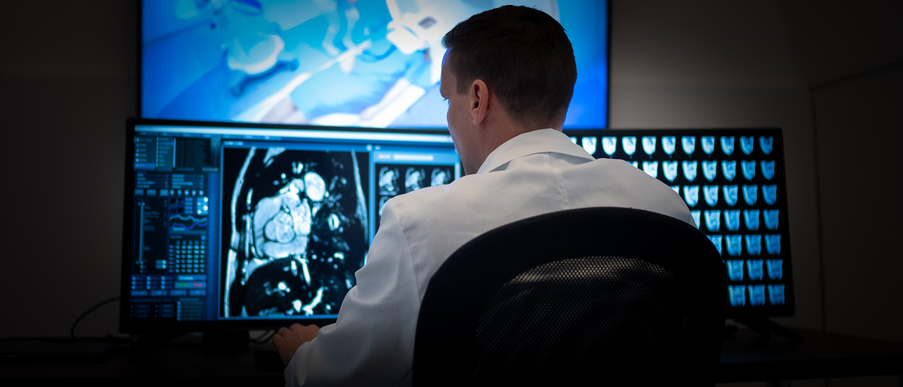
In the world of medical imaging, few advances have transformed how doctors diagnose and treat disease as profoundly as PET scan technology. From detecting cancer at its earliest stages to monitoring brain function and heart health, PET scans offer a window into biological processes that would otherwise remain hidden.

Here, Garrard Hendrix, Riverside Medical Center's nuclear medicine supervisor, discusses PET technology's expanding role in modern medicine and why it continues to be a powerful tool in the fight against disease.
What Is Nuclear Medicine and Why Does It Matter?
Nuclear medicine is a medical field that uses small amounts of radioactive materials — called radiopharmaceuticals — to diagnose and treat diseases. It includes imaging techniques like PET and SPECT scans to assess how organs and tissues are functioning, and can also deliver targeted treatments for certain cancers.
"One of the key advantages in our area is the ability to provide functional information about the body, rather than just structural imaging like CT or X-ray," says Hendrix.
The Imaging Refresh Project
Riverside recently upgraded its imaging technology at the Bourbonnais Campus, constructing a new 5,000-square-foot imaging suite. As part of the Imaging Refresh Project, the suite now features three new imaging systems — including the advanced Canon Cartesian Prime digital PET/CT scanner with AI-assisted technology.
"We now have a CT system that is designed for deep intelligence. The AI-powered super resolution technology, with the redesigned workflow experience, will meet our needs with both routine and advanced imaging capabilities," explains Hendrix. "This thing is pretty cool. In just one rotation, it can acquire an entire heart in a fraction of a second. Faster scans boost workflow efficiency while improving patients' experience overall."
Riverside's Commitment to Cutting-Edge Technology
Before Riverside installed the first fixed PET/CT system in Kankakee County, PET/CT imaging was provided by a mobile unit parked outside the Bourbonnais clinic. While the partnership worked for years, patients often had to walk through rain, sleet, and snow to reach the trailer.
"This was obviously not ideal, so it was decided it was time to optimize our patient experience and deliver in-house PET/CT services," notes Hendrix. "It's Riverside's principal intent to provide our patients with the most cutting-edge technology as the premier health care provider in this county, as well as surrounding communities."
The new imaging systems offer significantly shorter scan times, improving the experience for both patients and physicians. The integration of AI also enhances image quality and supports more accurate diagnoses. Hendrix acknowledges that some may be skeptical of AI-driven technology — but says it's simply the direction medicine is heading.
"Don't be alarmed, we're not looking to replace anybody with robots," he says. "The truth is, AI in health care is here to stay. It enhances diagnostic accuracy, improves patient outcomes, streamlines processes, and fosters future innovations. We at Riverside are positioned to take advantage of the newest technology available to us, and we are prepared to march forward towards what's on the horizon."
Related Providers



Related Articles
Riverside expands Bourbonnais Campus with permanent imaging technology
In an effort to benefit both patients and staff, Riverside Healthcare has expanded imaging technology at ...
Advancements in PET/CT technology: Read Henry's story
In 2016, Henry Bittmann found a bump on his right leg that he thought was a pimple. Then one day in the s...