For the Heart: Personalized Medication Management & Tips to Control Blood Pressure
June 3, 2026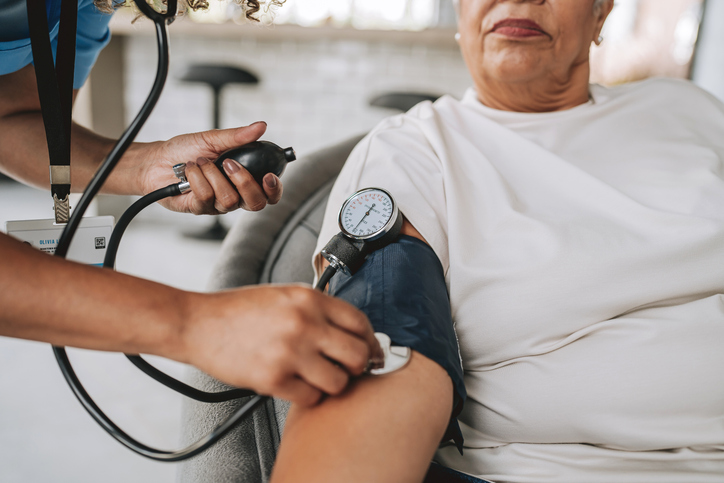
Categories: Cardiovascular
Managing heart-related conditions often involves multiple medications, frequent adjustments, and ongoing monitoring—an experience that can feel overwhelming for many patients. Riverside Healthcare’s Cardiology Pharmacotherapy Clinic (CPC) was designed to bridge that gap, offering personalized, pharmacist-led care that helps patients safely and confidently reach their health goals.
A focus on treatment
Kellye Eagan, PharmD, BCPS, BCACP, CDCES, serves as Lead Ambulatory Care Clinical Pharmacist for the clinic. As an ambulatory care pharmacist, she works directly with patients in an outpatient setting, focusing on treatment rather than diagnosis. “I work similarly to advanced practice clinicians,” Eagan explains. “I meet with patients one-on-one, ensuring that they’re reaching their health goals.”
Originally known as the Anticoagulation Clinic, the CPC has expanded significantly in recent years. Today, the clinic manages far more than blood thinners. “We not only do pharmacist-led anticoagulation management, but now we’re also doing pharmacist-led hypertension,” Eagan says. Services also include cholesterol management, stable heart failure care and cardiovascular risk reduction, including support with weight-loss medications.
Individualized care
At the core of the CPC’s approach is medication optimization—a process ensuring that every medication a patient takes is necessary, effective, safe and realistic. “We make sure that every medication a patient’s on is indicated, it’s working, it’s safe, and it’s something that that patient can actually take,” Eagan says. “We make sure that treatment plan is really individualized.”
That individualized care is especially important because not every patient fits neatly into standard treatment guidelines. “Everything we have in healthcare is evidence-based,” she says. “However, not all patients fit that mold.” Pharmacists are uniquely equipped to adjust medications based on side effects, lifestyle, cost concerns and other health conditions.
More frequent follow-ups
Patients referred to the CPC often benefit from more frequent follow-ups than traditional provider visits allow. “I’m a big believer in smaller, more frequent changes,” Eagan shares. “If a patient doesn’t tolerate a change or that medication isn’t working for them, we catch it pretty quickly.” This allows the care team to pivot early, rather than waiting months for the next appointment.
Initial visits typically last about an hour and focus heavily on education and understanding the patient’s daily routine. “It’s very important to us to understand what your routine is,” Eagan says. “If you’re busy all the time, I’m not going to choose a medication that’s dosed three times a day unless we really talk about it.”
Education plays a major role in building confidence. “Knowledge is power,” she emphasizes. “If we can empower patients and help expand their knowledge about the medications and the disease state, then we can empower them to manage their own condition.”
The CPC is not meant to replace a primary care provider or cardiologist, but to support them. “I never replace the provider—ever,” Eagan says. “Think of the provider as a professor, and I’m like a tutor.”
Patients who struggle to reach health goals, experience medication side effects, take many prescriptions or have complex medical histories may benefit most. “Sometimes we even take patients off medications,” she notes. “We don’t always think medications are the answer. We support lifestyle as well.”
For patients seeking added guidance and reassurance, the Cardiology Pharmacotherapy Clinic offers expert support— one thoughtful adjustment at a time. Talk with your primary care provider to learn more about access to this program. To find a primary care provider, go to the accepting new patient providers page.
8 tips for controlling your blood pressure
Over time, high blood pressure can increase your risk for heart disease and stroke, as well as damage your kidneys and eyes.
The good news is that in most cases, you can take steps to reduce your blood pressure to healthier levels with your healthcare provider’s help.
Ways to take control:
- Keep a daily log of your blood pressure readings, taken at the same time each day, to track your progress.
- Get at least 150 minutes of physical activity each week. That’s about 30 minutes a day, five days a week.
- Don’t smoke.
- Eat a healthy diet. Limit sodium and alcohol, which raise blood pressure.
- Maintain a healthy weight.
- Learn ways to reduce your stress levels.
- Take your blood pressure medication as prescribed.
- If you have diabetes, monitor your blood sugar levels and follow your recommended treatment, including medication.
Sources: American Heart Association; Centers for Disease Control and Prevention
Related Providers


Related Articles
What are CT Heart Scans and why are they important?
Dr. Amit Zachariah, an Interventional Cardiologist at the Riverside Heart and Vascular Institute Heart he...
The Farmer’s Market Isn’t Just Trendy—It’s a Hidden Gem for Heart Health
There’s something special about a trip to the farmer’s market—the fresh produce, vibrant colors, an...