Precision Surgery with Advanced Robotics
Minimally invasive robotic surgery for faster recovery and better outcomes.
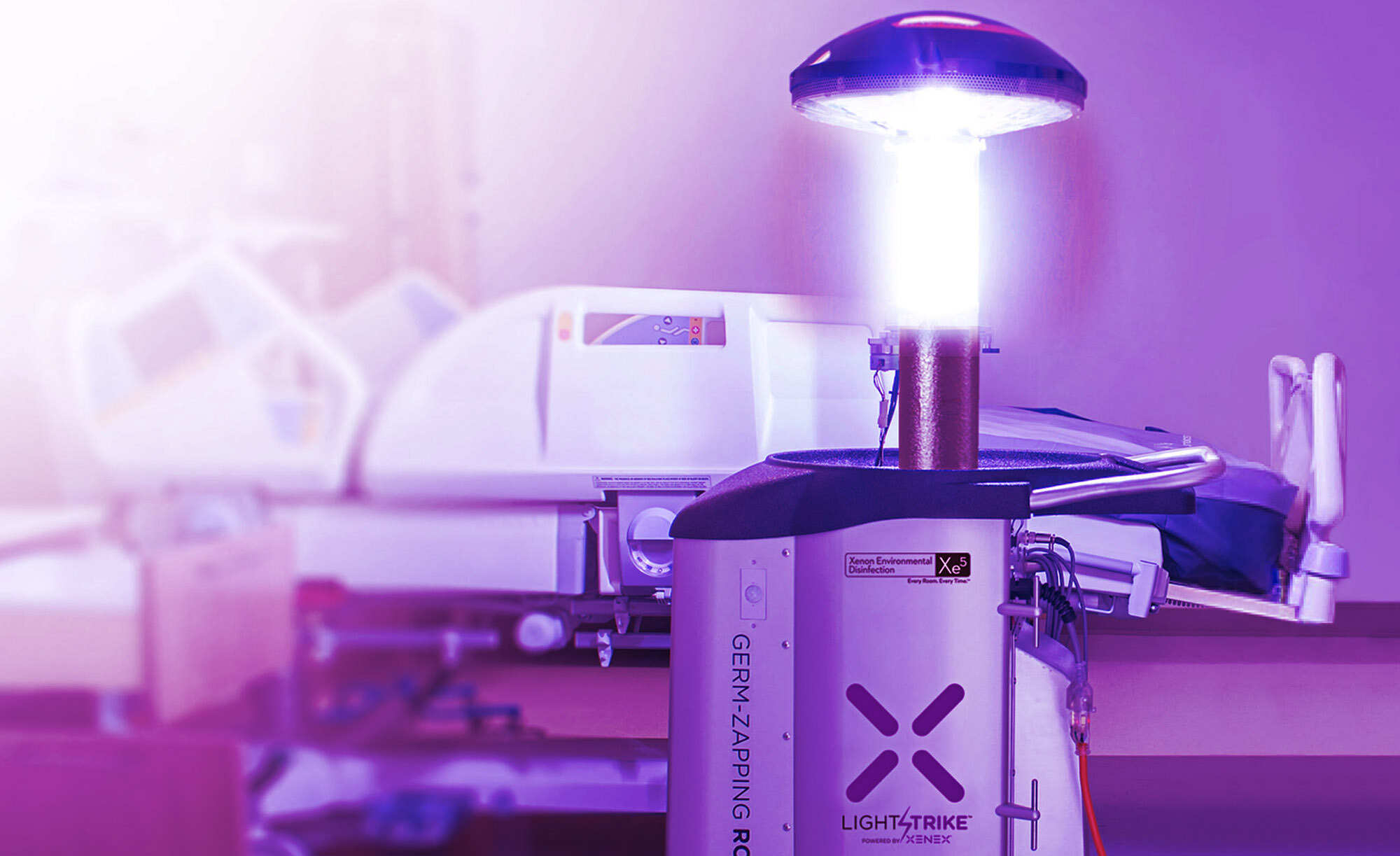
Safety & Peace of Mind Improved Through Xenex LightStrike Robotics
Listen NowRiverside surgeons have used robotic tools for more than 15 years, in general surgery, orthopedics, urology, OB-GYN, brain and spine care, and lung care.
Robotic tools do not replace your surgeon. They give your surgeon steadier hands, a magnified 3D view, and instruments that bend farther than a human wrist. Your surgeon stays in control of every movement.
How Robotic Surgery Helps You
Robotic surgery lets your surgeon work through incisions about one to two centimeters wide instead of one long opening. For many patients, that means:
- Smaller incisions and less scarring
- Less blood loss
- Less pain after surgery
- A shorter hospital stay
- A faster return to daily life
Not every procedure can be done with a robot. Your surgeon will tell you whether it is a good fit for your condition.
See Robotic Surgery at Riverside
Riverside surgeons explain how robotic-assisted surgery works and who it can help.
Robots We Use at Riverside
da Vinci XI Surgical System
Used by General Surgery, Urology, and OB-GYN.
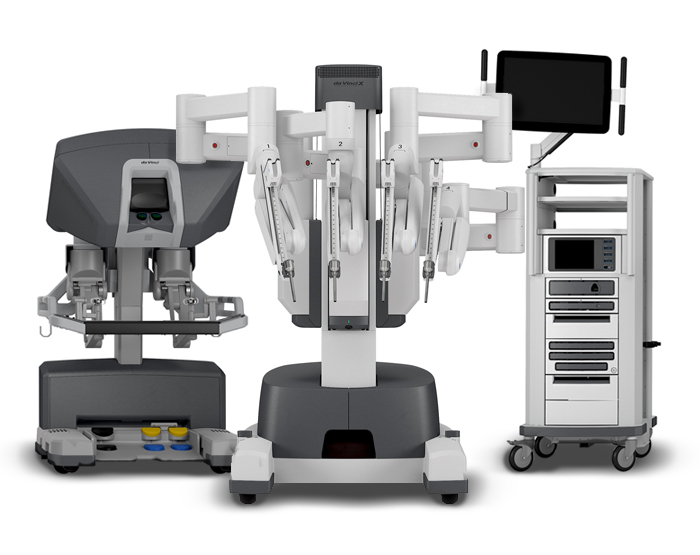
The da Vinci XI has four robotic arms mounted on an overhead boom that rotates and pivots into almost any position. The arms can be disconnected and reconnected partway through a procedure if your team needs to reposition them.
Your surgeon sits at a console in the same room. A 3D-HD vision system gives a highly magnified view, and the console translates your surgeon's hand movements into smaller, more precise movements of the instruments inside your body. Your surgeon is in control of the robot at all times.
Surgeons trained on the da Vinci XI at Riverside Medical Center perform:
- Hernia repair
- Complex abdominal wall reconstruction
- Anti-reflux surgery
- Gallbladder surgery
- Surgery of the small and large intestine
- Weight-loss surgery
- Prostate surgery
- Kidney surgery
- Surgery of the ovaries and uterus
Mako SmartRobotics
Used by Riverside Orthopedic Specialists for knee and hip replacement.
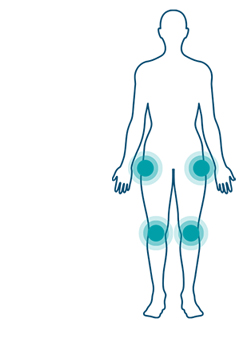
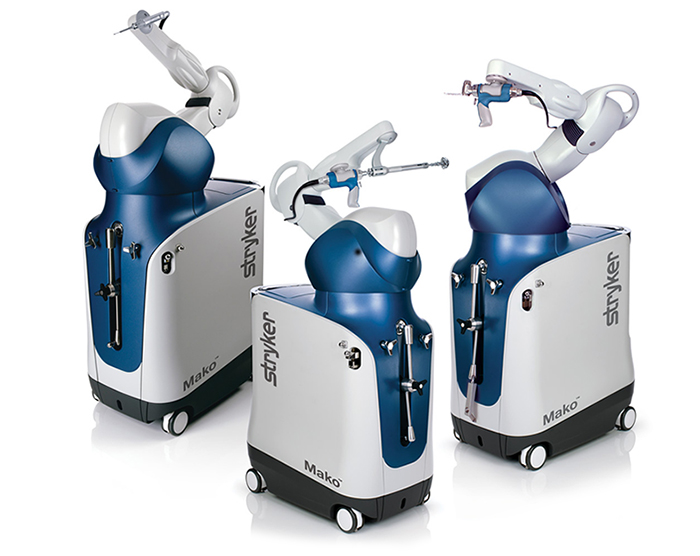
Mako SmartRobotics helps people living with painful arthritis of the knee or hip. Before your surgery, 3D CT-based planning software builds a model of your joint so your surgeon can create a personalized replacement plan.
In the operating room, your surgeon guides Mako's robotic arm within that plan. AccuStop technology helps your surgeon stay inside the planned boundaries, so less healthy bone is removed.
Mako does not perform surgery, make decisions on its own, or move without your surgeon guiding it. Your surgeon can also adjust the plan during surgery if needed.
Cirq Robotic Alignment Module
Used by the Riverside Brain & Spine Institute.
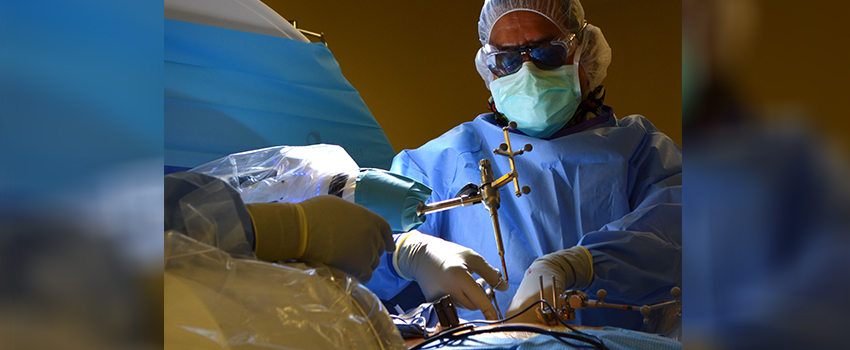
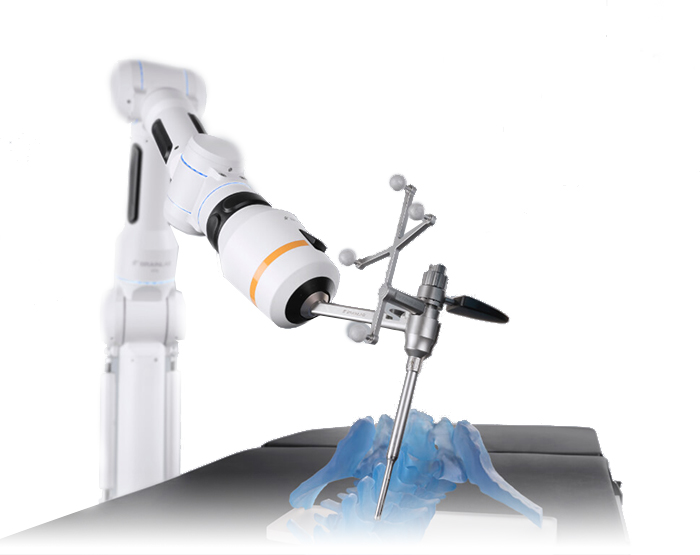
Cirq, nicknamed "Cirqules" after the Roman god known for strength, is shaped like a human arm. During an operation your surgeon moves it into position and locks it in place to guide and steady each step.
With that extra software-driven hand, Riverside's neurosciences specialists can focus both of their own hands on the delicate parts of the procedure.
ORBEYE Surgical Exoscope
Used by the Riverside Brain & Spine Institute for skull base and spine procedures.
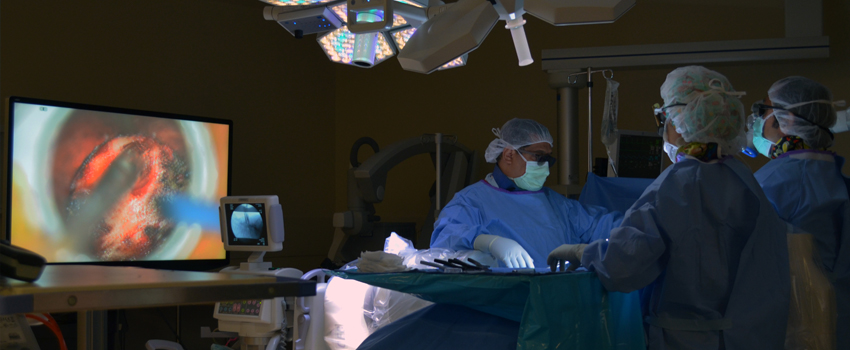
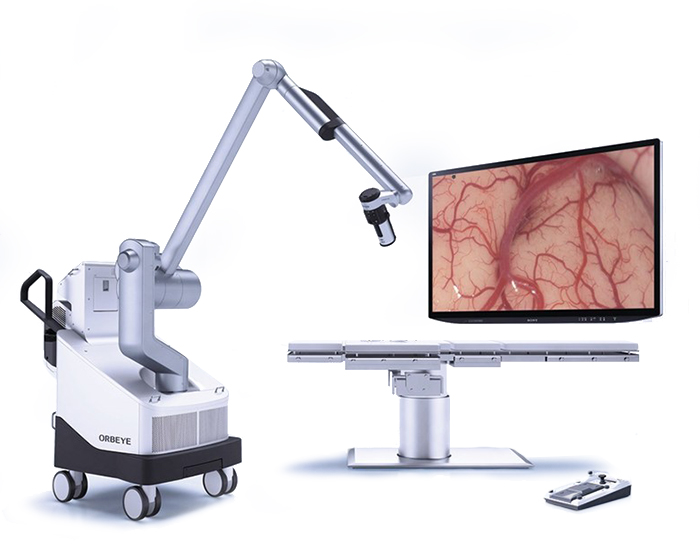
ORBEYE produces 4K-3D images at up to 26 times magnification on a 55-inch monitor, so the whole surgical team sees the same detailed view in real time. That view shows tissue, tumors, and blood vessels clearly enough for the team to tailor the procedure as they go.
All of this happens through incisions about the size of a dime, which shortens recovery. Because your surgeon watches a monitor instead of leaning into an eyepiece, the team can work upright and with less fatigue. Riverside uses the ORBEYE 4K-3D microscope, developed jointly by Olympus and Sony.
Zeiss Kinevo Surgical Microscope
Used by the Riverside Brain & Spine Institute.
Riverside partnered with Brainlab to bring augmented reality into brain and spine surgery through the Zeiss Kinevo microscope. It projects an image of your internal structures over the live view, so Riverside's neurosciences specialists can see exactly where they are in a procedure.
The system combines your earlier scans with real-time data. Surgeons can view it through a headset or on a nearby screen, and the images keep pace with their movements without delay.
Ion Robotic Lung Biopsy System
Used by Riverside Pulmonary Medicine.
Riverside was the first in the area to offer a minimally invasive approach to lung biopsies. The Ion system guides a thin, flexible catheter that bends 180 degrees in any direction, so your doctor can reach small nodules deep in the lung.
Because there are no external incisions, this approach can lower infection risk, shorten recovery, and get you an answer sooner. Learn more about lung cancer care at Riverside.
Robots Beyond the Operating Room
Our Xenex LightStrike robots disinfect patient rooms and surgical suites with pulsed UV light. The light destroys germs on surfaces that routine cleaning can miss, and every room gets this extra step before the next patient arrives.
Listen to our Xenex LightStrike podcast episode.
Explore Robotic Procedures
- Robotic and Minimally Invasive Surgery
- Robotic-Assisted Gallbladder Surgery
- Robotic-Assisted Hysterectomy
- Robotic-Assisted Prostatectomy
- Robotic Joint Replacement
- Ion Robotic Lung Biopsy
Talk with a Riverside Surgeon
Find Out if Robotic Surgery Is Right for You
Ask your primary care provider for a referral, or reach a Riverside surgical team member directly. Our general surgery team can answer your questions.
Robotics at Riverside
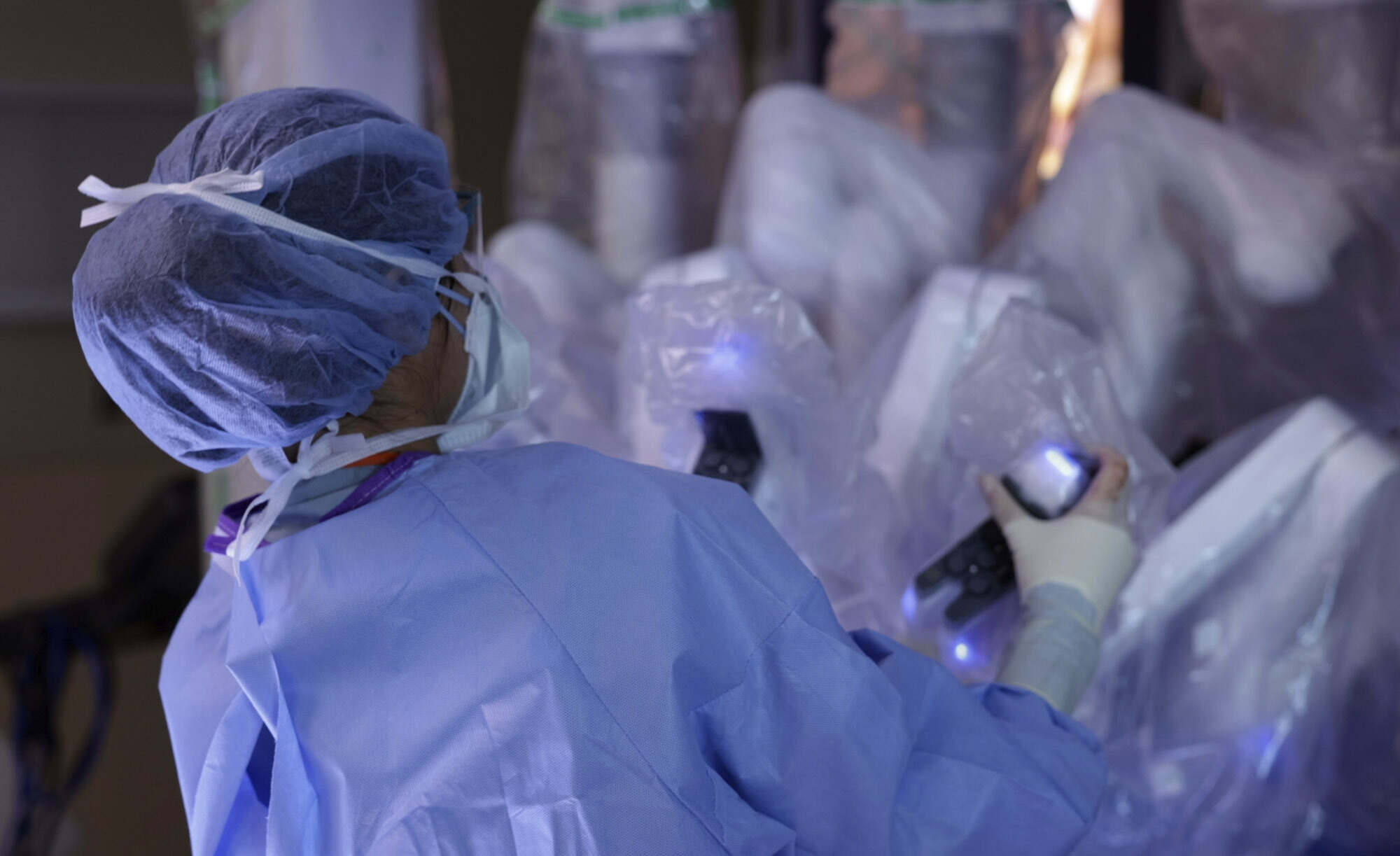
Robotic surgery, or robot-assisted surgery, allows doctors to perform many types of complex procedures with more precision, flexibility, and control than is possible with conventional techniques.
Watch the Video|
|
DaVinci XIUsed by General Surgery, Urology, OB-GYN The newer DaVinci XI system features the addition of a fourth arm to the system. Along with this, all of the arms are mounted onto an overhead boom that can rotate and pivot into virtually any position. The arms can even be disconnected and reconnected mid-procedure if the doctors feel like swapping them around. The robotic system acts as an extension of the surgeon's eyes and hands, giving the physician 3-D magnified vision and 360° dexterity of four arms, which allows for more effective, precise surgical movements. The surgeon is 100% in control of the robot, which translates their hand movements into smaller, more precise movements of tiny instruments inside the patient’s body. Additionally, the immersive 3D-HD vision system provides surgeons a highly magnified view, virtually extending their eyes and hands into the patient. Surgeons specifically trained on the DaVinci Xi at Riverside Medical Center are able to perform numerous kinds of abdominal, gynecological, and urological operations. This specifically means surgeons can offer robotic-assisted hernia repair, complex abdominal wall reconstruction, anti-reflux surgery, gallbladder surgery, surgery of the small and large intestine, weight-loss surgery, prostate surgery, kidney surgery, and surgery of the ovaries and uterus. |
|
|
|
|
|
MakoUsed by Riverside Orthopedic Specialists Mako SmartRobotics is an innovative solution for many suffering from painful arthritis of the knee or hip. Mako uses 3D CT-based planning software so your surgeon can know more about your anatomy to create a personalized joint replacement surgical plan. This 3D model is used to preplan and assist the surgeon in performing the joint replacement procedure. In the operating room, the surgeon follows your personalized surgical plan while preparing the bone for the implant. The surgeon guides Mako’s robotic arm within the predefined area, and Mako’s AccuStop technology helps the surgeon stay within the planned boundaries that were defined when the personalized pre-operative plan was created. By guiding the doctor during surgery, Mako’s AccuStop technology allows the surgeon to cut less by cutting precisely what’s planned to help protect healthy bone. It’s important to understand that the surgery is performed by an orthopedic surgeon, who guides Mako’s robotic arm during the surgery to position the implant in the knee and hip joints. Mako SmartRobotics does not perform surgery, make decisions on its own or move without the surgeon guiding it. Mako SmartRobotics also allows your surgeon to make adjustments to your plan during surgery as needed. |
|
|
|
|
|
|
CirqUsed by Riverside Brain & Spine Institute The Cirq, dubbed “Cirqules” after the Roman god known for strength, is an essential part of the team of leading-edge technologies Riverside Healthcare utilizes to deliver expert patient care. Inspired by the form of the human arm, Cirq is a reliable and intuitive assistant during surgical procedures. With robotic technologies Riverside's Neurosciences Specialists can focus on the delicate skillful parts of the procedure, while the Cirq becomes like a third arm, aiding in accuracy and placements. During an operation, the surgeon moves and locks the robot into place to guide and stabilize surgical steps. By having an extra, software-driven hand, the surgeon can focus on the procedure with both human hands. |
|
|
|
|
|
|
|
ORBEYEUsed by Riverside Brain & Spine Institute The precise 4K-3D images from the ORBEYE surgical microscope provide 26x magnification imaging to aid in life-saving procedures, all displayed on a large 55-inch 4K-3D monitor for the entire surgical team to view in real-time. The enhanced imaging provides high-resolution details of structural and surrounding tissue, tumors, blood vessels, and other features, allowing the team to tailor appropriate surgical interventions. This all happens through dime-sized incisions, which has a major impact on the recovery time for the patient. Additionally, the ORBEYE has the potential to reduce surgeon fatigue by eliminating the need for extensive microscope eyepiece viewing and allows for a more comfortable, upright working posture. The ORBEYE microscope unit itself is much smaller, too, allowing for additional operative space. The ORBEYE 4K-3D Microscope, developed in a joint venture between Olympus Corporation and Sony Imaging Products & Solutions, Inc., is used for skull-based and spine procedures and enhances minimally invasive techniques used by neurosurgeons in some of the most complex and lengthy neurosurgeries. |
|
|
|
 |
Augmented Reality with Zeiss Kinevo MicroscopeUsed by Riverside Brain & Spine Institute Riverside has partnered with Brainlab to bring this technology to the region by using the company's Zeiss Kinevo Microscope. This new technology provides Riverside's Neurosciences Specialists with a projected image of a patient's internal structures, allowing surgeons to gauge where they are in the procedure and focus directly on an area. This technology gives surgeons clearer visuals by compiling previous scans as well as real-time data. Riverside surgeons can choose to use the augmented reality either by a headset or nearby screen. The fast image processing system results in real-time visualization with no delay between the surgeon’s movements and the screen’s display. This allows for smooth viewing and precise instrument placement for the operation of a specific location. |