Interventional Radiology
Minimally Invasive Treatment
Interventional Radiology at Riverside Healthcare
Some health problems that once required open surgery can now be treated through a tiny incision, no bigger than the tip of a pencil. That is the promise of interventional radiology (IR). Our team uses advanced imaging technology to guide small instruments inside your body, treating conditions with less pain, lower risk, and faster recovery. You stay close to home for care that used to mean a trip to Chicago.
Meet Our Team
Our interventional radiology providers combine specialized training with a commitment to your comfort.
Visit Our Clinic
Located on the Riverside Medical Center campus in Kankakee, with convenient Monday through Friday hours.
Request an Appointment
Talk to your doctor about a referral, or call our clinic to learn how to get started.
Conditions & Services
Conditions We Treat
Our interventional radiology team treats a wide range of conditions. Many of these procedures offer a less invasive alternative to traditional surgery, meaning less time in the hospital and a quicker return to your daily routine.
Dialysis & Kidney Care
- Dialysis access creation (AV fistula, AV graft)
- Tunneled dialysis catheter placement
- Dialysis access maintenance and repair
Nephrostomy Tube Management
- Nephrostomy tube placement (kidney drainage)
- Tube exchanges and maintenance
- Ureteral stenting
Blood Pressure & Vascular Care
- Hypertension evaluation and treatment
- Peripheral artery disease treatment
- Angioplasty and stenting
Women's Health
- Uterine fibroids
- Uterine fibroid embolization (UFE)
- Pelvic congestion syndrome
Thyroid Disease
- Thyroid nodule biopsy (fine needle aspiration)
- Thyroid nodule evaluation
Inpatient Procedures
- Central line and PICC line placement
- Port placement for chemotherapy
- Abscess and fluid drainage
- Image-guided biopsies
Image-Guided Biopsies & Drainage
- Liver, kidney, and lung biopsies
- Soft tissue and bone biopsies
- Paracentesis (abdominal fluid drainage)
- Thoracentesis (chest fluid drainage)
Not sure if interventional radiology is right for your situation? Call us at (844) 404-4787 and our team will help guide you.
How It Works
Our Approach to Minimally Invasive Care
Interventional radiology uses real-time imaging, such as X-ray video (called fluoroscopy), ultrasound, and CT scans, to guide tiny instruments through your blood vessels or directly to the treatment site. This means:
- Smaller incisions — Most procedures use an incision the size of a pencil tip. No large surgical cuts needed.
- Faster recovery — Many patients go home the same day and return to normal activities within days rather than weeks.
- Lower risk — Less blood loss, less risk of infection, and less anesthesia compared to traditional surgery.
Our interventional radiology providers work closely with your primary care doctor, specialists, and the rest of your care team at Riverside. Whether you are managing a chronic condition or facing a new diagnosis, we coordinate your care so you do not have to navigate it alone.
Learn more about related services at Riverside:
Your Visit
What to Expect
We know that any medical procedure can feel stressful. Here is a general overview of what to expect. Your care team will give you specific instructions for your situation.
Before Your Procedure
- You will meet with an IR provider for a consultation to discuss your condition and treatment options
- Your team will explain any preparation steps, such as fasting or adjusting medications
- You may need lab work or imaging ahead of time
During Your Procedure
- Most procedures use local anesthesia with light sedation to keep you comfortable
- Your provider uses real-time imaging to guide tiny instruments to the treatment area
- Procedures typically last between 30 minutes and a few hours, depending on the treatment
After Your Procedure
- Many patients go home the same day after a brief recovery period
- You will receive clear instructions for care at home, including activity guidelines
- Our team follows up to check on your recovery and answer any questions
Common Questions
Frequently Asked Questions About Interventional Radiology
What is interventional radiology?
Interventional radiology (IR) is a medical specialty that uses imaging technology, like X-rays, ultrasound, and CT scans, to perform minimally invasive procedures. Instead of large surgical incisions, IR providers treat conditions through tiny openings, often just the width of a pencil tip. This approach typically means less pain, shorter hospital stays, and faster recovery compared to traditional surgery.
Do I need a referral to see an interventional radiologist?
In most cases, your doctor will refer you to our interventional radiology team when they believe an IR procedure is the best option for your condition. If you think IR might be right for you, talk with your primary care provider or specialist about a referral. You are also welcome to call our clinic at (844) 404-4787 with questions.
Will I be awake during the procedure?
Most IR procedures are performed with local anesthesia (numbing the area being treated) and light sedation to help you relax. You may feel pressure but should not feel pain. Some more complex procedures may require deeper sedation or general anesthesia. Your care team will explain what to expect based on your specific procedure.
How long does recovery take?
Recovery time varies by procedure, but many patients return to their normal activities within a few days. Some procedures, like biopsies or drain placements, may allow you to go back to light activity the next day. Your provider will give you specific guidelines based on your treatment.
Is interventional radiology covered by insurance?
Most IR procedures are covered by insurance, including Medicare and Medicaid. Riverside Healthcare accepts most major insurance plans. We recommend checking with your insurance provider before your procedure to understand your coverage. Our billing team is also available to help. View our accepted insurance plans.
What conditions can be treated with interventional radiology?
IR treats a wide range of conditions, including kidney and dialysis problems, thyroid nodules, high blood pressure, blocked blood vessels, and more. IR providers also assist in cancer treatment by placing ports for chemotherapy, performing biopsies, and in some cases, treating tumors directly. If you are not sure whether IR can help with your condition, call us at (844) 404-4787.
What is the difference between a radiologist and an interventional radiologist?
A diagnostic radiologist reads and interprets medical images, like X-rays and MRIs, to help diagnose conditions. An interventional radiologist takes it a step further by using those same imaging tools to actually treat conditions through minimally invasive procedures. Think of it this way: diagnostic radiologists find the problem; interventional radiologists treat it.
Where is the Riverside Interventional Radiology Clinic located?
Our clinic is located at 500 N Wall Street, Suite C100, Kankakee, IL 60901, on the Riverside Medical Center campus. We are open Monday through Friday, 8:00 a.m. to 4:30 p.m. Get directions and full clinic details.
Take the Next Step
Whether you are exploring treatment options or ready to schedule, our interventional radiology team is here to help. Remarkable care is right where you live.
Our Locations
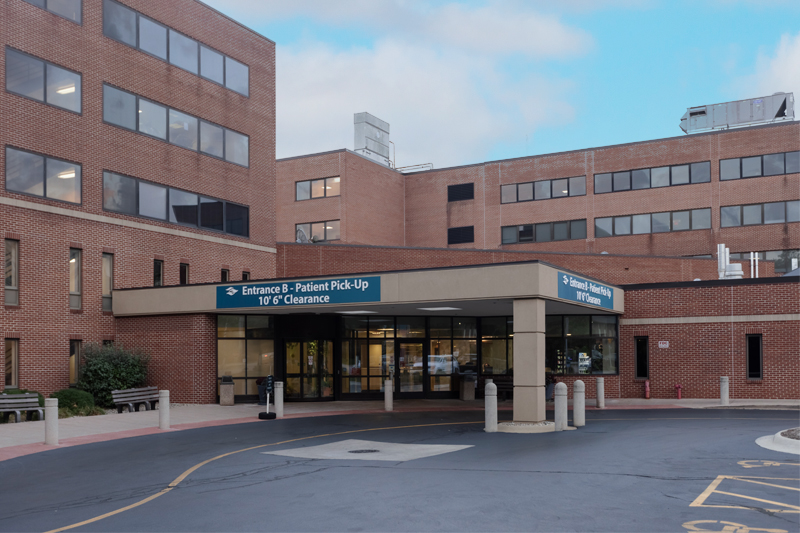
Interventional Radiology
Riverside Interventional Radiology Clinic
500 N Wall Street Suite C100 - Kankakee, IL 60901